CLEAR OFFER
Define who the first version is for, the problem it solves, what you are offering and what action you want the buyer or user to take.
FOR NON-TECHNICAL FOUNDERS
Web Inventix AI helps non-technical founders turn a business or product idea into a focused launch page, prototype, workflow, or MVP built around what needs to be tested first.
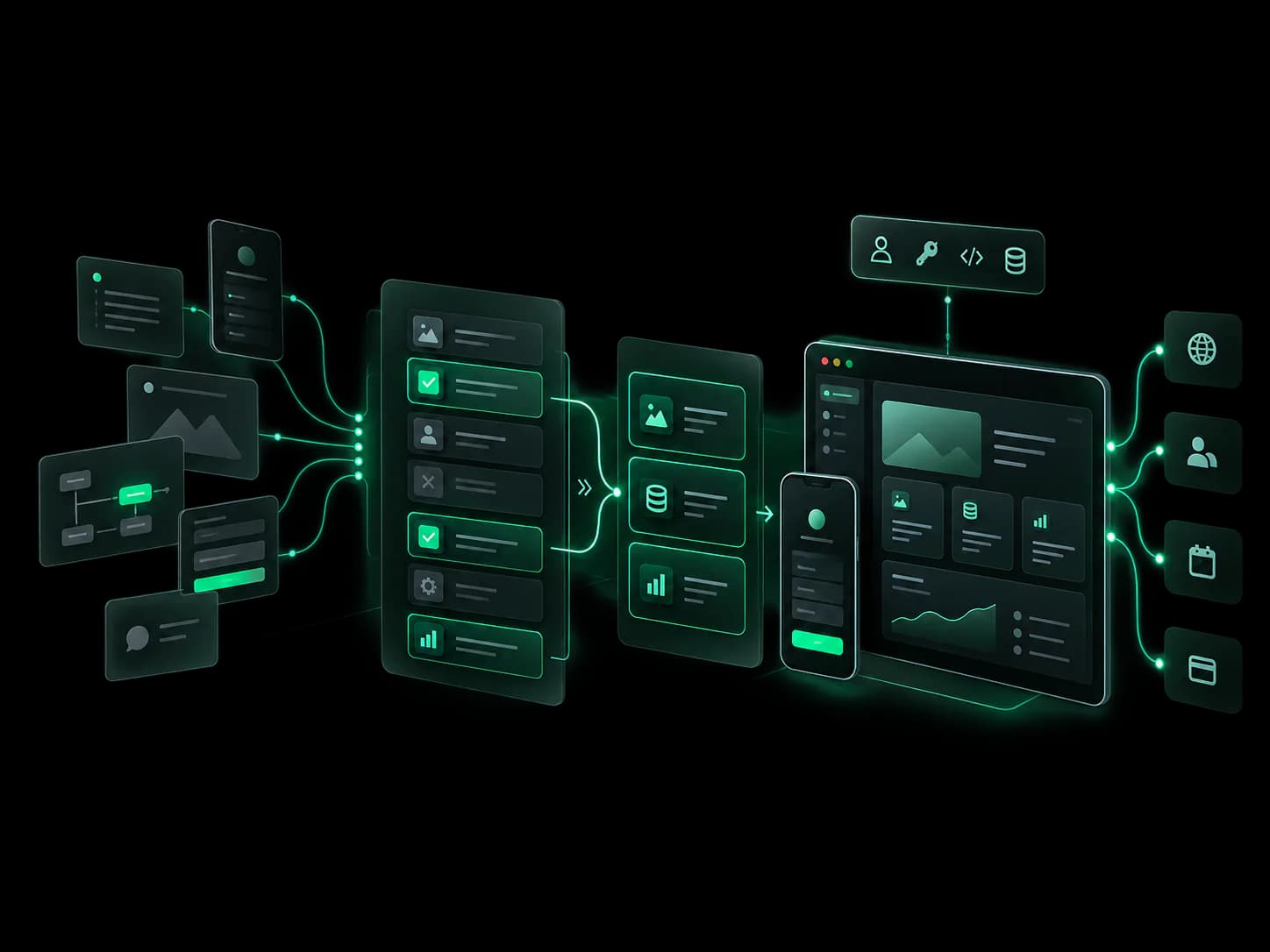
The first build should give you useful evidence. It may need to generate customer conversations, demonstrate a workflow, validate a product flow, or support a real operating process.
Define who the first version is for, the problem it solves, what you are offering and what action you want the buyer or user to take.
Separate what the first version needs from features that can wait. Keep the build tied to a specific business result.
Choose the right form for the first version: launch page, website, workflow, prototype or custom MVP.
Leave the build stage with something you can launch, demonstrate, operate or put in front of real users.
BUILDING TOO EARLY GETS EXPENSIVE
A common mistake is turning an early idea into a large feature list before the customer, offer, workflow and first use case are clear. That can lead to rework, changing requirements, disconnected tools and a product that takes too long to reach users.
Web Inventix AI starts with the business problem and defines the smallest practical version that can produce useful feedback or operating value. Then we build.
You can understand the market, customer or operating problem without knowing how to turn it into a product architecture, workflow or development plan. This solution connects the business requirement to the right first build.
You understand the market or business problem but need help translating that knowledge into a product, workflow or customer-facing system.
You have a serious idea but need to define the offer, customer path, first version and technical path before spending heavily on development.
You need a partner who can translate business requirements into product scope, workflows, data, integrations and a practical build plan.
You already started, but scope, ownership, architecture, vendor management or delivery has become unclear and the project needs a controlled next step.
RIGHT FIRST BUILD
Your first build does not automatically need to be custom software. We select the smallest format that can test the offer, prove the workflow, support users or create useful operating evidence.
Best for
An idea, offer or service that needs customer conversations before a larger product investment.
Possible outputs
Best for
A service, consulting business or early company that needs a professional online presence and a clear sales path before custom software.
Possible outputs
Best for
A software, platform, automation or workflow concept that needs something tangible before a larger production build.
Possible outputs
Best for
An idea with enough clarity and evidence to justify a functional product build.
Possible outputs
Your project does not automatically move to the largest option. We recommend the smallest build that can produce useful customer or operational evidence.
The process keeps business decisions, product requirements and technical work connected. Each stage should produce a clear output before the project expands.
Clarify the customer, problem, business objective, offer, workflow, assumptions and result the first version needs to prove.
Define users, required functionality, data, integrations, permissions, acceptance criteria, dependencies, exclusions and delivery stages.
Design, develop, integrate and test the agreed first version in controlled stages with visible working outputs.
Put the first version into real use, collect feedback, measure the defined result and decide what deserves further investment.
Before development expands, Web Inventix AI documents the parts of the project that affect scope, cost, technical decisions and acceptance.
The build method depends on what the business needs to prove or operate. Web Inventix AI can support product, workflow and software delivery across a focused range of first-build formats.
Focused pages for testing an offer, generating conversations or supporting an early launch.
Professional sites with clear positioning, lead capture, booking and an organised buyer path.
Interactive product concepts used to validate flows, screen logic and the first user experience.
Focused web products built around one primary use case, a defined user set and a controlled first scope.
Business applications that replace spreadsheets, email handoffs or manual operating steps.
Connected forms, approvals, routing, records and notifications built around a defined process.
Secure interfaces for customers, partners or teams to submit, access or manage information.
Operational views that bring selected data and actions into one working interface.
AI features added where they solve a defined task such as classification, extraction, assistance, search or conversation.
Connections between product functions, business systems and approved third-party platforms.
TECHNOLOGY
We work with established AI, cloud, development, data and infrastructure technologies. The stack is selected around your requirements, integrations, security needs, scale and long-term ownership.
Examples of technologies we can build with include:









A product can become difficult to operate when the developer or vendor controls the repository, domain, hosting, API accounts or production access. Web Inventix AI sets ownership and handoff expectations at the project level so the right accounts and assets can sit with the client.
Final ownership terms should follow the signed project agreement, payment status, third-party licence terms, pre-existing Web Inventix AI materials and any identified third-party components.
This solution page should route visitors to the existing Web Inventix AI service that matches the actual work. Do not duplicate those service pages here.
Use when the project needs a public web experience, product interface or application build.
Explore Web & App DevelopmentUse when the first version requires custom workflows, databases, portals, dashboards or product logic.
Explore Custom Software DevelopmentUse when the idea is primarily an operating workflow, system handoff or automation problem.
Explore AI Workflow AutomationUse when the founder already has a stalled, over-scoped or unclear build that needs assessment and recovery.
Explore AI Project RescueUse when the founder or leadership team needs ongoing senior AI and technical decision support rather than a single build.
Explore Fractional AI AdvisorDEFINED PROJECT BOUNDARIES
Every engagement should identify what is included, what is excluded, what the client must provide and what counts as accepted work. New requirements are reviewed before they become development work.
The page, prototype or MVP shown on this page is not an unlimited development package. Complex multi-role applications, marketplaces, advanced AI systems, custom payment logic, mobile applications, enterprise integrations, regulated-data requirements and production infrastructure may require a separate or expanded scope.
START WITH THE FIRST VERSION
Bring us the business problem, product idea or existing project. We will help define the right first version, what it needs to do and the most practical path to building it.