Business AI Workshop
A practical 90-minute to 2-hour session for a mixed business team.
Best for
AI fundamentals, prompting, everyday work and responsible use.
AI TRAINING & ADOPTION
Give teams role-based guidance for using approved AI tools in everyday work, with clear review, privacy and responsible-use practices.
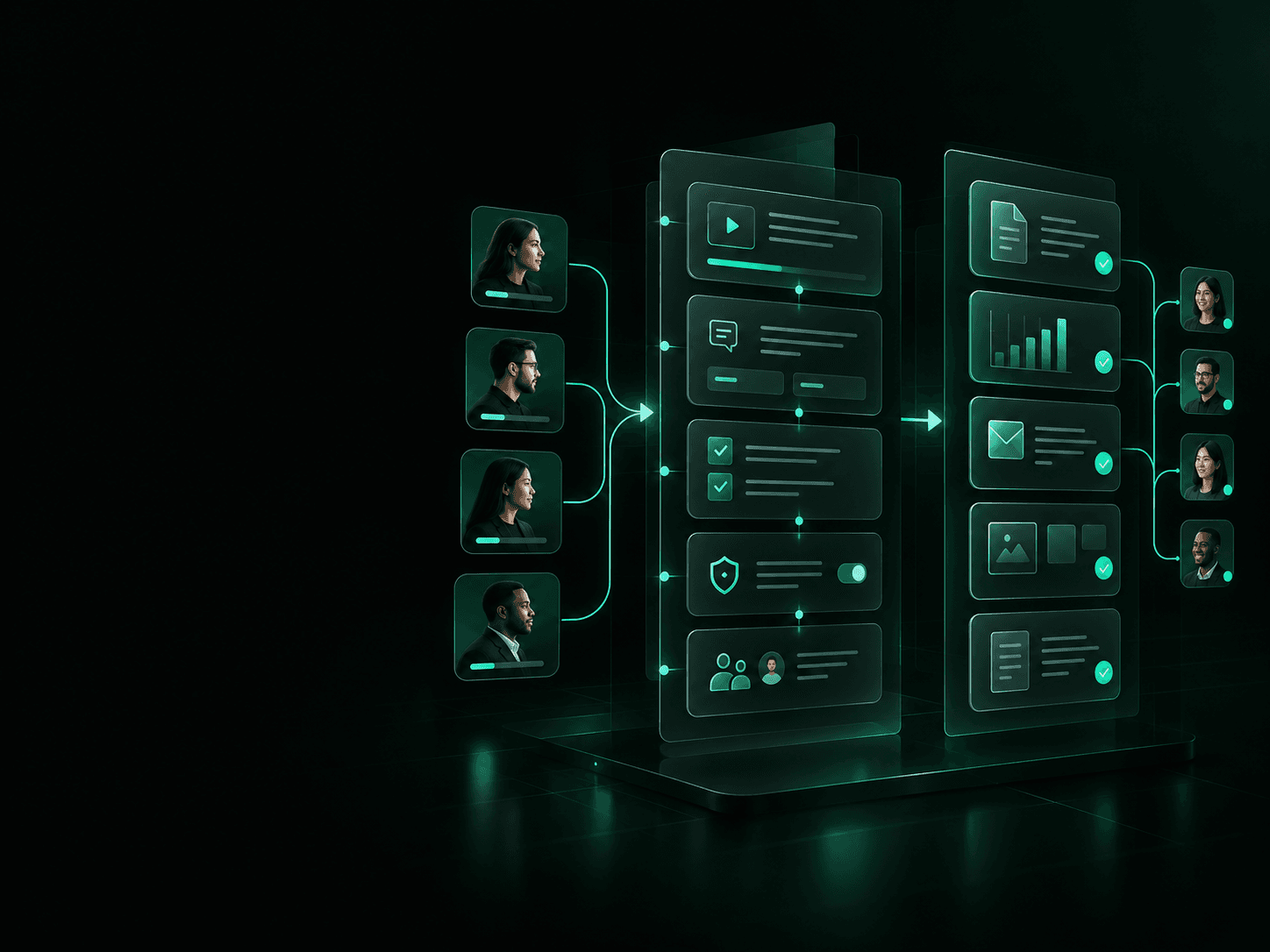
Generic AI demonstrations rarely change how people work.
We start with the tasks, tools and responsibilities already used across your business. Training then focuses on practical ways approved AI tools can support those activities without removing human judgement, review or accountability.
Examples based on everyday business work.
Training can be aligned with the AI platforms your organization already permits.
Teams learn where AI can assist and where people remain responsible for the final decision.
WHAT YOUR TEAM WILL LEARN
Training is adapted to your organization, approved tools and the work participants perform.
FOUNDATION
Understand what generative AI can and cannot do, where it can assist employees, and where human review still matters.
PROMPTING
Learn how to provide context, instructions, constraints, source material and review criteria for stronger outputs.
COMMUNICATION
Use AI to support emails, documents, meeting notes, summaries, presentations and internal communication.
ANALYSIS
Structure questions, compare information, summarize material and develop working drafts without treating AI output as verified fact.
WORKFLOWS
Apply AI to defined activities across sales, operations, administration, leadership, customer service and other business functions.
RESPONSIBLE USE
Learn what information should not be placed into unapproved tools, how outputs should be checked and when a task should remain with a person.
OUR APPROACH
The goal is not to teach your team every AI feature. It is to identify useful applications, practise them in context and give employees a clear way to apply what they learned.
Identify participant roles, common tasks, current tools and the areas where AI may provide practical support.
Use examples connected to the work participants already perform rather than generic demonstrations.
Develop approved prompts, examples, review steps and usage guidance that employees can reference after training.
Identify what worked, where further guidance is needed and which use cases should be developed further.
Sessions can be delivered for mixed business teams, individual departments, leadership groups or broader adoption programmes.
A practical 90-minute to 2-hour session for a mixed business team.
Best for
AI fundamentals, prompting, everyday work and responsible use.
Focused training built around one team's work.
Best for
Sales, operations, administration, customer service, marketing or another defined business function.
A decision-focused session covering business applications, risk, internal policy, adoption priorities and areas for further evaluation.
Best for
Owners, executives and management teams.
A structured programme combining multiple sessions, role-specific use cases, approved examples and adoption support for larger teams.
Best for
Multi-team or organization-wide adoption.
A salesperson, operations manager and executive should not receive identical AI training. Sessions can be adapted around the decisions, information and responsibilities associated with each role.
Research accounts, prepare outreach, summarize calls, organize notes and support follow-up.
Summarize information, develop procedures, organize recurring work and support internal reporting.
Draft communications, organize documents, summarize information and support routine office tasks.
Draft responses, summarize customer issues, retrieve approved information and prepare handoffs.
Develop working drafts, research topics, organize campaign ideas and repurpose approved content.
Evaluate use cases, review risks, set expectations, define internal boundaries and identify adoption priorities.
WHAT YOU RECEIVE
The session is only part of the engagement. Based on the scope, supporting material can help employees apply the training consistently after the workshop.
Confirm participants, business context, current AI tools and training priorities.
Use scenarios connected to participant responsibilities rather than generic prompts.
Participants work through practical examples during the session.
Reusable examples can be prepared for common tasks covered during training.
Reinforce privacy, verification, human review and approved-tool boundaries.
Identify areas where additional training, workflow design or adoption support may make sense.
Productivity matters, but employees also need clear boundaries.
Training can reinforce your organization's approved tools, data handling requirements and review practices so employees understand where AI can be used and where additional caution or human approval is required.
Understand what company information should stay out of public or unapproved AI tools.
Recognize situations where customer, employee or other personal information requires additional care.
Treat AI output as working material that may require fact checking, source review and professional judgement.
Keep people responsible for decisions involving customers, employees, financial matters, legal matters and other higher-impact activities.
Teams often need continued guidance after the first session as they begin applying AI to real work.
Web Inventix AI can help identify repeatable use cases, develop approved prompt examples, refine internal practices and determine where training should progress into workflow automation or other operational improvements.
Turn successful training examples into repeatable business practices.
Help employees improve prompts, review methods and working habits.
Identify areas that may benefit from additional training, internal guidance, workflow automation or an AI Efficiency Audit.
STARTING PRICE
A practical live session built around your team, approved tools and selected business use cases.
FAQ
AI TRAINING & ADOPTION
Start with one team, one department or one workshop.
We can help identify the right training scope, align it with the tools your organization uses and build the session around work your employees already perform.